For this response, I will be focusing on the novel Cancer Vixen by Marisa Acocella Marchetto. Within the selected pages we had to read for class, I realized a common theme of blame or guilt. One of the pages in this comic book is a game-like puzzle piece. Each step shows different studies and/or reasons as to why people develop cancer. This game is titled: “The Cancer Guessing Game.” These puzzle pieces and all the possibilities of how Marisa could have developed cancer all lead back to the same emotion—guilt. She feels as though she is to blame for developing cancer. Marisa thinks back at all the things she did in life, and considers those actions as possible reasons as to why she is in the situation she finds herself in. I think this illuminates the idea of women always taking the blame, and always being the reason as to why bad things happen. I think about Mother Nature, and how people blame a woman entity for when the weather does not go according to plan. Society always places the blame on women, and this true, personal story from Marisa shows how the diagnosis of cancer consumes her with fears of where she “went wrong.”
Category: Uncategorized
-
Research Paper Drafting
For my research paper drafting process, I chose to start with the section on the objectification of women. I chose to start here, because this is the area in which I have the most evidence from my primary text. In addition, starting from this point will illuminate the chain reaction of how objectification turns into eating disorders and body dysmorphia. I also feel that this is the section in which I personally feel most passionate about, due to life experiences, so I felt this was the easiest place to start. At first, I had a difficult time with this process, because I realized I had too many claims, with little evidence from my primary source to support them.
Once I condensed my claims, I was able to get a better idea of how I wanted to organize my draft. Throughout the drafting process, I was able to find that one of my sources can be utilized as a counter argument for the objectification of women. The drafting process compelled me to read my sources more closely. To conclude, the drafting process of my research paper really helped me gain a better idea of how I want to organize my final paper.
-
Zombies in Literature
In Beloved by Toni Morrison the relationship between Sethe and Beloved shows the zombified characteristic in literature. Sethe is constantly haunted by the sacrifice she made in order to escape slavery. Her daughter’s ghostly presence consistently reminds her of her motherly failures. Sethe’s dead daughter, the one whose throat she cut, had come back to fix her. Sethe was worn down, speckled, dying, spinning,
changing shapes and generally bedeviled. That this daughter beat her, tied her to the bed and pulled out all her hair”(Morrison 484). Sethe is physically harmed by her past decisions. I think this shows how women are tortured or judged if they make a decision for themselves. Sethe chose to put herself first, and in return she is haunted by her daughter.Although the way she killed her daughter is brutal, this was all Sethe felt she could do in order to escape. The zombie characteristic found in literature is illuminated through the ghostly presence of Beloved, but also through Sethe. She becomes “zombified” through her daughter because she is consumed by guilt, leaving her paralyzed. Women are overtaken by the guilt felt when they take action to protect themselves.
-
His Dark Materials Response
For this week’s blog post, I am choosing to respond to His Dark Materials, which was selected by one of my classmates for the whole class to read. After reading the selected pages, it became clear to me that the only way for women to get power was through marriage. Obviously this is unfair and should not be the case. I also find the mention of Adam and Eve interesting because I feel as though Lyra’s father is taking the story of Adam and Eve and utilizing that to blame women for the fall of mankind. Her father makes it apparent that his wife, her mother, longs for power, and the only way she could get that was through marriage.
I almost feel like this text is trying to say that when women have power bad things happen so men should always be in control. Men should always be the backbone or the reasoning as to why women have power. I completely disagree with this thinking.In my opinion, we shouldn’t look at what Eve did and continue to blame women for her actions. Women should be able to gain power independently, and this text shows how self expression and autonomy over the body is stripped from women.
All in all, Lyra‘s school experiences and encounters with adults show that girls and women are expected to just follow the rules and always do as they’re told. This text also shows the lack of trust in women.
-
Research Madness
My research paper for my senior seminar course is about the perception and portrayal of women’s bodies, and how this leads to unrealistic expectations of skinniness and causes eating disorders/body dysmorphia. To find secondary sources, I decided to google search different things. I searched different things like “obsession with the body”, “male expectations of the female body”, “jealousy amongst friends due to weight”, “weight biases”, etc. These searches led me to great sources that discussed multiple topics in which I will be talking about within my paper.
A lot of the sources also match key moments within my primary sources. For instance, the dynamic between Lizzie and China—Lizzie longs for validation from her friend, and internally compares her weight to China’s. The sources I found explain the psychological reasoning as to why she does this. My secondary sources also show how social media and expectations of women’s bodies affect Lizzie’s way of viewing herself. I was surprised to find sources about the Victorian and Renaissance period, and to learn about the physical harm from corsets and surgery. It’s appalling to me that women feel like they have to go to such extreme lengths to be accepted as beautiful. I had an enjoyable time doing this research, and know that my secondary sources will support my claims about women’s bodies.
-
Stereotypes Affecting Women
The selected readings from my classmates show how women are negatively impacted by the expectations society sets upon them. Women are affected psychologically, socially, and physically by beauty standards and the roles in which they are expected to play. The readings from “A Thousand Suns” shows how gender deems what one’s morals should be. This story shows societal judgment towards a young woman, due to her being pregnant. However, the man responsible for her pregnancy was able to leave with no repercussions or judgment. This is a perfect example of society always placing the blame on women, and ultimately making them feel guilty.
This theme of guilt is reflected within my other classmates reading of the journal article on women’s body image. This reading shows how women begin to feel guilty because they do not look like the skinny women in all the magazines. To add, this guilt leads to women starving themselves and developing eating disorders in order to fit in. Women genuinely do not feel comfortable in their own skin, and it’s all because of society and expectations from men. Women need to stick together and reject the skinny expectations. Women need to reject the expectations of being a wife, mother, caregiver, stay-at-home wife, etc. We must reject irrational thinking and irrational stereotypes. This is the only way for us to change society.
-
Research Paper Topic & Plans
For my research paper, I will be writing about expectations of women’s physical appearances, and how this leads to body dysmorphia and other mental health disorders. This topic is important to me because I was always made fun of in school for being bigger than everyone else. I went so far as to not eat for a whole week in the sixth grade, because I was bullied for being “fat.” All I wanted was to feel normal. I felt like something was wrong with me. Obviously, this is not the case, and there was never anything wrong with me. However, I want to analyze the psychology behind why I thought something was wrong with me. I want to analyze through my research how other people’s opinions and comments lead to declining mental health and obsession over the body.
For the publication of my research, I want to submit to Rock Creek Review Journal. This journal focuses on feminism and the importance of respecting women. It also publishes undergraduate work, so I would like to submit my research to this journal.
For the class, I am having them read specific vignettes from the novel 13 Ways of Looking at a Fat Girl by Mona Awad. The scenes I selected show particular instances of the main character attempting to cover up her body because of her insecurities of being larger, as well as scenes that contain derogatory thinking towards larger women. I want readers to see the ways men view larger women, and how they take advantage of them. I also selected sections from a journal article from the Child Mind Institute that show real cases of children covering up their flaws, and how they become obsessed with the “wrongs” others point out.
I already know that this topic is going to be difficult to talk about, and read about. However, it needs to be discussed. In addition, I know this topic will reveal the great lengths women will go to in order to impress a man. To add, this topic will reveal the negative results of bodily obsession.This topic will also reveal the impact other people, social media, and literature have on women.
Lastly, I want to learn the psychology behind my topic. I want to learn the chain of events that goes on in someone’s mind after they begin to view themselves negatively. I want to learn how we can change the culture of women representation. I want my research to shed light on the idea of truly accepting oneself, and understanding that every body is beautiful.
-
Reflection on Past Papers
Writing has always interested me. It was always a chance for me to express myself, and analyze whatever material read in class without the fear of being judged from classmates. I remember having to write a personal narrative in the Eighth Grade. This assignment followed the reading of The Narrative of the Life of Frederick Douglass. I remember having lots of fun brainstorming for this assignment; thinking of noteworthy events in my life. This was definitely a piece of writing that I will remember.
Even more noteworthy is an assignment from Sophomore year of High school. For this particular assignment, we were instructed to write a short story about whatever we wanted. Of course, there was a certain criteria we had to meet, but all in all, we had lots of freedom with this writing assignment. I remember writing a huge plot twist, and feeling accomplished when a classmate read the story and enjoyed it. This was my strongest piece of writing in Highschool, because I was felt I could write with no restrictions. Writing this story inspired me to go on and write a novel my senior year of High school.
In college, I think I have done a good job at the papers I write. I noticed that my writing style was vague when I got feedback from professors, and hope that by the end of my years at Rowan, it will be better. I think that my essay responses in U.S. Literature were always strong, and same thing with Shakespeare. I am good at providing textual evidence to support my claims, and explaining why this evidence is important.
Personally, I enjoy writing these blog posts. This is where I have felt the most freedom to write however and whatever I feel. Writing paper’s has never really felt like a task to me, it’s always felt like a chance to express myself.
-
Menopause and Hysteria
According to medical texts in the Victorian period, menopause and hysteria are directly linked to one another. After reading the article “Menopause and Hysteria in Victorian Medical Texts and Rhoda Broughton’s ‘Mrs. Smith of Longmains” by Louise Benson James, I realized that old age is linked to insanity. The narrator is not taken seriously by her daughters, and they automatically assume she is sick and forbid her from society. They make her stay home while they go out and have fun. This ties into the statement the article makes about women not being wanted around in society when at menopausal age, for fear of spread delirium.
I decided to ask ChatGPT to summarize the above mentioned article to see what it had to say about the plot line in relation to medical texts on menopause and hysteria. It mentions how in the nineteenth century, doctors viewed hysteria as a nervous disorder and linked it directly to women’s reproductive organs. It also states that menopause was viewed as a period in which women were mentally unstable and vulnerable. ChatGPT goes on to say that the narrator experiences menopausal-like symptoms. It does not provide examples though. It argues that this story counteracts the claims made in medical texts, since the narrator was correct about the dream she had, and was not insane or delirious after all. ChatGPT points out that the narrator is middle-aged and has children, so she is in the menopausal period. Her dream (that ends up saving another woman’s life) shows that women are not irrational just because they are a certain age.
I think that this AI tool did a decent job at making a connection between the article and the story. I also think it summarized the key argument of the article, and discussed the overall history of the connection between menopause and hysteria. I do think that it could have done a better job at providing key examples, so I would not use it to summarize the article without reading the article as well. There was nothing in the summary that was incorrect. I think that the results may have been different if I asked the tool to provide specific examples from the article. All in all, ChatGPT did a decent job at summarizing the argument of the article.
-
Awakening in Identity
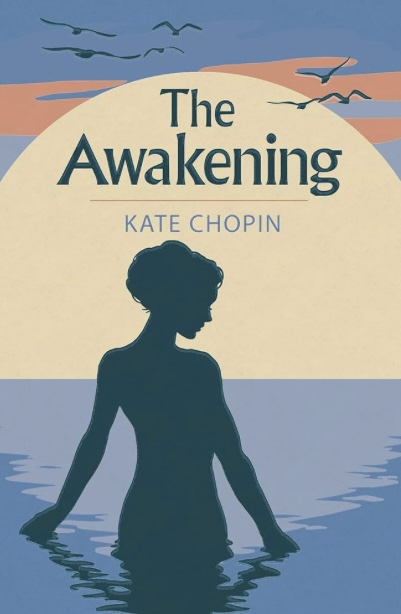
Throughout my previous blog posts, the effects of expectations put onto women have been discussed. Women are expected to stay at home, take care of the house and the children, and always support their husbands. Due to this, women never have the time for hobbies. They can never put their wants and needs first. This idea is especially prominent within Kate Chopin’s novel The Awakening. The novel takes place during the late nineteenth century. During this time, the idea of women indulging in hobbies and a lifestyle that pleased them was unheard of. In my opinion, this is really sad. Women are so powerful, and without them, we would not have anyone to give birth to children. Women are more empathetic than men, they are gentle souls. So, I believe the world should always appreciate women and let them do as they please, just as men do!
During this time period, if a woman did as she pleased, others were quick to assume she had lost her mind! Within the novel, Mr. Pontellier is not happy with his wife choosing to complete tasks in which she enjoys. I find his response to her self love to be revealing of his true character: “It sometimes entered Mr. Pontellier’s mind to wonder if his wife were not growing a little unbalanced mentally. He could see plainly she was not herself. That is, he could not see that she was becoming herself and daily casting aside that fictitious self which we assume like a garment with which to appear before the world”.(Chopin 147-148). These lines show that Mr. Pontellier is quick to assume something is wrong with his wife, when she finally starts to care for herself. His idea of his wife and who she is does not match who she truly is.
The shift from Mr. Pontellier’s perspective to Edna’s shows how differently they view the situation. Mr. Pontellier views Edna as a lazy wife and mother, who is probably going insane because she is not herself, she is not completing her usual tasks. In contrast, Edna views the situation as her finally putting herself first, and learning who she truly is. She is tired of playing a role, and is ready to dig deep into herself and reveal her true nature to society. Edna is done fulfilling a role. Of course, I agree with Edna in this situation. I think that she deserves to indulge in activities that please her. She deserves to have alone time, and Mr. Pontellier can watch after the children. I know this is not accurate for this time period, but the obvious inequalities in this marriage anger me.